37 Creative Granny Square Crochet Ideas – Free Patterns
A crisp, clean square of cotton yarn resting against a stack of warm plates provides an immediate sense of accomplishment for any maker. These projects offer more than just a functional tool for the kitchen, as they allow you to experiment with color placement and texture without the pressure of a large garment. Beginners often find the repetition of basic stitches relaxing, while experienced crafters enjoy the opportunity to refine their gauge and edge consistency. You will learn to manipulate traditional construction methods to build shapes that stand up to daily scrubbing and repeated cycles through the washing machine.
Why You’ll Love This Pattern
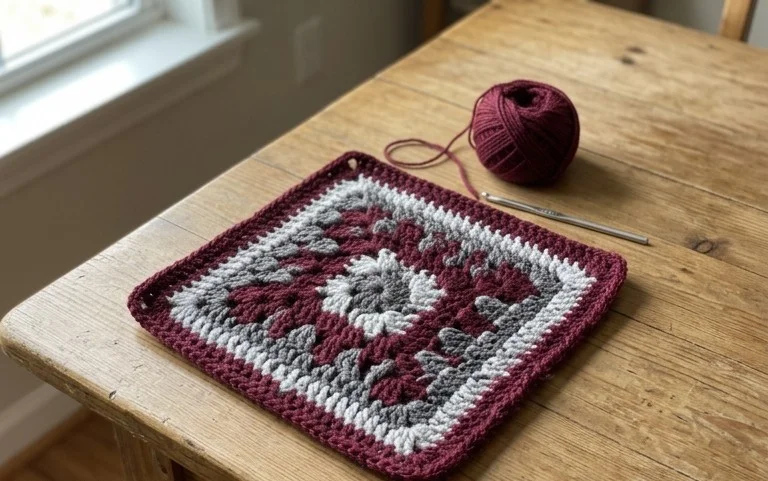
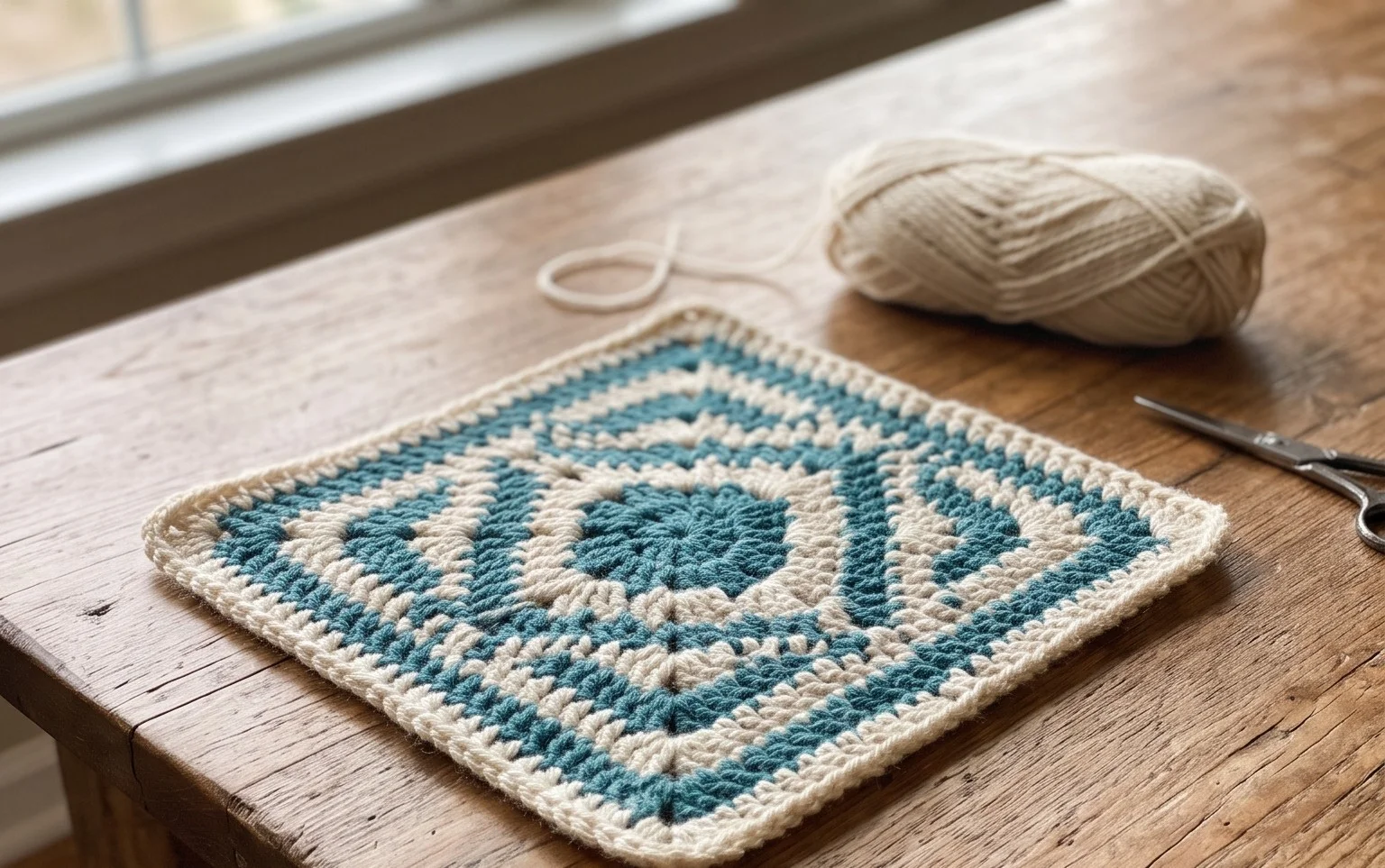
The Classic Crochet Dishcloth is a functional staple that works up quickly using simple, repeating stitches. Because it uses a durable cotton yarn, it holds up well to frequent washing and provides enough texture to scrub dishes effectively without scratching non-stick surfaces. It is an ideal project for practicing even tension, as the square shape allows you to see exactly how your stitches stack row by row. Beginners find this project rewarding because it yields a useful household item in under two hours, making it an excellent way to build confidence before tackling larger garments or home decor.
I managed to finish three of these over the weekend using a single skein of cotton. They have replaced my store-bought sponges entirely and hold soap beautifully.
— Sarah, home crafter
Pattern Overview & Skill Level
- Skill Level: Beginner
- Approximate Time: 1 to 1.5 hours
- Construction: Flat square worked in rows, starting from a foundation chain and ending with a finished edge.
- Finished Dimensions: 8 inches by 8 inches.
Materials & Supplies Needed
- Yarn: Worsted weight (#4) 100% cotton yarn, approximately 75 yards.
- Hook Size: 5.0 mm (H-8).
- Notions: Tapestry needle for weaving in ends, scissors, and a measuring tape.
- Safe Yarn Substitutions: Any medium weight (aran) cotton or cotton-linen blend works well. Avoid acrylics or wool, as they do not absorb water efficiently and will not withstand the high temperatures required for sanitizing kitchen linens. Using a thinner yarn will result in a smaller square, requiring more chains at the start to achieve the desired 8-inch width.
Stitch Guide & Abbreviations (US Terms)
- ch: chain
- st: stitch
- sc: single crochet (insert hook, yarn over, pull up a loop, yarn over, pull through both loops on hook).
- hdc: half double crochet (yarn over, insert hook, yarn over, pull up a loop, yarn over, pull through all three loops on hook).
- sl st: slip stitch (insert hook, yarn over, pull through stitch and loop on hook).
- Turning chain: The ch 1 or ch 2 at the beginning of a row that brings your hook to the height of the next row.
Step-by-Step Pattern Instructions
Foundation and Main Body
The dishcloth is worked in rows, alternating between single crochet and half double crochet to create a balanced, absorbent fabric.
- Row 1: Ch 30. Sc in the second ch from the hook and in each ch across. (29 sts)
- Row 2: Ch 2 (counts as hdc), turn. Hdc in each st across. (29 sts)
- Row 3: Ch 1, turn. Sc in each st across. (29 sts)
- Rows 4–28: Repeat Rows 2 and 3 until the piece measures approximately 8 inches from the starting edge.
Finishing
To give the edges a polished look and prevent curling, work a simple border around the entire square.
- Border: After completing the final row, do not fasten off. Ch 1, turn your work to rotate 90 degrees. Work sc evenly down the side of the dishcloth, placing one sc into the end of each row. When you reach the corner, ch 2.
- Continue working sc along the foundation chain edge, then up the remaining side.
- Work 3 sc into each corner to keep the fabric flat.
- Join with a sl st to the first sc of the border, fasten off, and weave in your ends securely using a tapestry needle.
Care & Washing Instructions
- Machine wash your dishcloths on a warm cycle (up to 104°F/40°C) with similar colors.
- Tumble dry on low heat or lay flat on a clean towel to dry to prevent excessive shrinking.
- If the cloth becomes misshapen after a heavy wash, dampen it with water and gently stretch it back into a square shape before letting it air dry.
Pro Tips & Common Mistakes to Avoid
- Tension consistency: If your edges look wavy, you may be pulling your stitches too loosely at the start and end of each row. Focus on keeping the first and last stitch of every row slightly tight.
- Counting stitches: Use a stitch marker on the first stitch of every row to ensure you do not accidentally drop or add stitches, which would turn your square into a trapezoid.
- Weaving ends: To prevent ends from unraveling after many washes, weave your yarn tail through at least three different directions within the fabric, then trim the excess closely.
- Adjusting size: To make the cloth larger, add more chains to your foundation; note that every extra 10 yards of yarn will add roughly 1 inch to the height of the project.
Frequently Asked Questions
Can I use a synthetic yarn for this pattern?
While synthetic yarns like acrylic are durable, they are not absorbent. They will push water around the surface rather than soaking it up, making them unsuitable for cleaning dishes.
Why do my edges look uneven?
Uneven edges are usually caused by missing the last stitch of a row. Always count your stitches after every row to ensure you have exactly 29 stitches before turning.
Is this pattern suitable for someone who has never held a hook?
Yes, this is an ideal beginner project. It focuses on the two most fundamental stitches in crochet and requires no shaping or complex counting.
May I sell the dishcloths I make from this pattern?
You are welcome to sell items made from this design. Please provide credit to the pattern creator when listing your items online.
These squares look fantastic stacked in a basket on your kitchen counter, adding a splash of color to an otherwise utilitarian space. You might try using a variegated yarn to create subtle color shifts or increase the starting chain length if you prefer a larger, rectangular washcloth for cleaning bigger pans. Posting a photo of your finished work helps others visualize their own potential color combinations for this quick project. Check back on the blog next week for more free patterns to fill your afternoon hours.